
What began as a classroom challenge quickly became an ambitious student-led project.
This summer, visitors and residents can take a journey through the solar system without ever leaving Lake George, thanks to a group of Lake George High School astronomy students who designed and built a scale model of the solar system stretching from Park Lane Motel to Expedition Park.
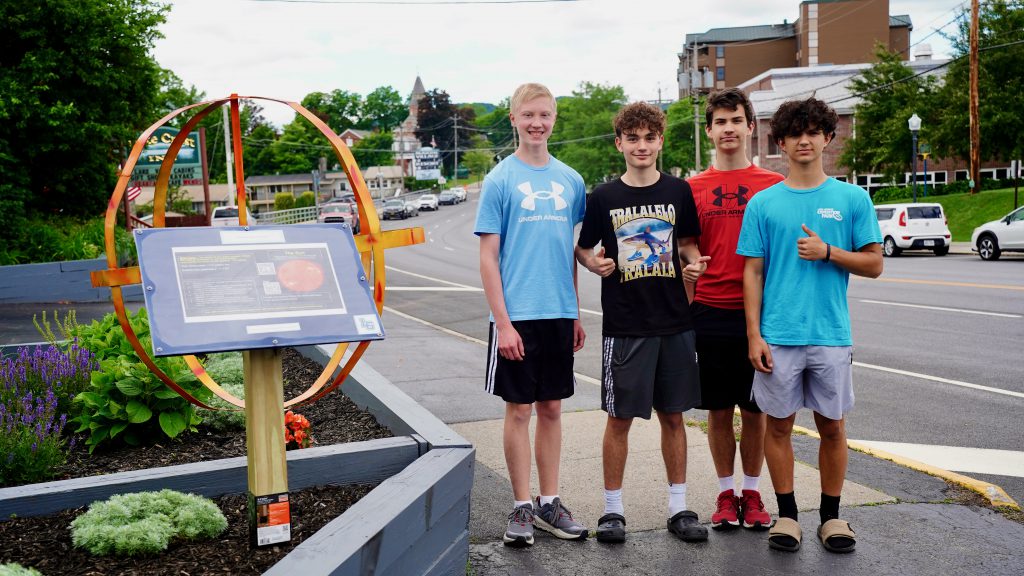
PHOTO 1: (l-r) Pason Ovitt, Nicolas Rimualdo, Owen Burns, and Tyler Morrissey
For students in astronomy teacher Eric Rosenbrock’s half-year elective course, the project started with a simple question, How do you accurately represent the vastness of space?
The answer turned out to be much more complicated than anyone expected.
“It started when four students in Earth Science tried building a scale solar system in the hallway,” Rosenbrock said. “That didn’t work the way they wanted, and they all agreed it needed to be accurate. Then we took it out to the football field and realized even the football field wasn’t big enough.”
The challenge became clear when students attempted to represent Mercury. At the scale they were using, even a pinprick was too large to accurately depict the planet. Determined to make the model as realistic as possible, the students worked backward from Mercury’s size, eventually creating a scale where a 4-millimeter sphere could accurately represent the smallest planet.
Using a scale of 1 millimeter to 1,200 kilometers, students calculated planetary diameters, average distances from the sun, and precise locations throughout the village. What originally seemed like a project that might fit along a road eventually expanded to encompass much of Lake George itself.
Sophomores Nicolas Rimualdo, Owen Burns, Pason Ovitt, and Tyler Morrissey spent months calculating measurements, building models, painting planets, creating signage, and solving problems as they arose.
The project required far more than scientific calculations. Students used spreadsheets and mapping software to determine exact placements and worked collaboratively to ensure the solar system followed as linear a progression as possible through the village.
For Nicolas Rimualdo, one of the most memorable parts of the experience was seeing an idea transform into reality.
“I really enjoyed getting together and talking through how we could actually make this happen,” Rimualdo said. “When it was finally finished, I felt relieved, but also proud that we were able to pull it off. It was awesome.”
The project also gave students an opportunity to work directly with local government and businesses. Rimualdo took the lead in reaching out to the community. Mayor Ray Perry helped coordinate with local businesses and property owners, ensuring that the students could place each planet throughout the village.
“There is a scale solar system in Sweden, but not many people have had the chance to see it,” Rimualdo said. “For a lot of people who visit this one, it will be the first time they’ve experienced something like this.”
The undertaking quickly became a community-wide collaboration.
Several science department staff noted that a village-wide solar system had been discussed for years. Both Robert Spath and retired teacher Roger Wells had hoped to see such a project become reality, and this year’s astronomy students finally brought the vision to life.
Custodian Elijah Lugo welded the sun display, while Anthony Malherio from Building and Grounds constructed the platforms that support each station. Robert Spath provided guidance throughout the project, and Dante Silette assisted with cutting epoxy materials. Librarian Sarah Olson helped Pason Ovitt produce the planets using the school’s 3D printers, while Ben Morrow contributed to station construction.
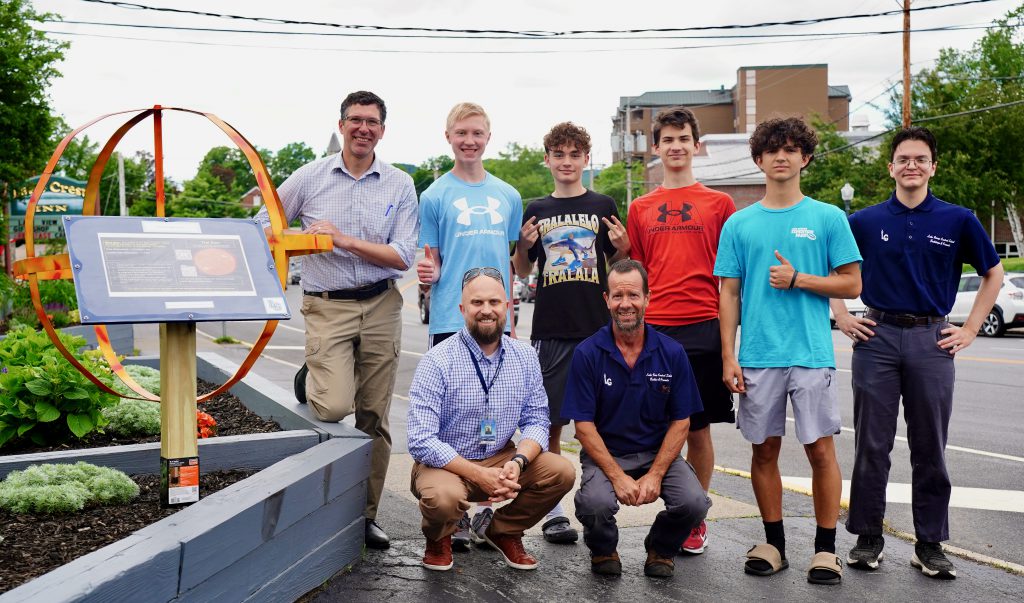
PHOTO 1: (l-r) Robert Spath, Pason Ovitt, Nicolas Rimualdo, Owen Burns, Tyler Morrissey, Elijah Lugo (front) Eric Rosenbrock, Anthony Malherio
While many adults contributed their expertise, the students remained at the heart of the project. They completed the scaling calculations, painted the planets, developed the signage format, and worked through countless design challenges.
Rosenbrock said one of the most rewarding moments came when students began to truly grasp the scale of the solar system they had created.
“Standing at Mars and looking back toward the sun gives you a real sense of the scale of the inner planets. It’s humbling,” Rosenbrock said. “But what was even more rewarding was hearing students come in on Monday morning talking about the work they had done over the weekend because they genuinely wanted to. They really took ownership of the project.”
The project began in March and continued through months of planning, construction, and installation. Students were so invested in the work that they chose to dedicate the planet stands to staff members and community members who have made a difference in Lake George.
Visitors following the model can start at the sun, located at Park Lane Motel, and continue through the village to encounter Mercury at the north corner in front of the Jr.-Sr. High School, Venus in front of the Jr.-Sr. High School gym, Earth near the Marriott, Mars at TD Bank, Jupiter at the Lake George Visitor Center, Saturn at Charles R. Wood Park, Uranus at The Barnsider Restaurant, and Neptune at Expedition Dinosaur Park.
Each station includes QR codes that allow visitors to access a map of the solar system and share where they have traveled from, helping students track the project’s reach.
The scale solar system will be installed each summer, providing residents, tourists, and future students with a unique opportunity to experience the immense distances of our solar system in a way textbooks never could.
For the students who spent months turning calculations into reality, the project represents something even bigger, proof that with creativity, persistence, and teamwork, even the vastness of space can be brought down to Earth.